
The Twiggs County Most Wanted Program
The Twiggs County Sheriff's Office links Macon Regional Crime Stoppers, which serves Twiggs as one of eight counties. Crime Stoppers maintains a curated wanted interface and accepts public tips. It is a regional program, not a county-maintained database of every arrest, bench, traffic, or municipal warrant.
This page does not reproduce names, photographs, mugshots, addresses, offenses, or a roster. Those details can change and belong on the official live wanted page. The civic use is to understand the program and report information safely.
Twiggs Crime Stoppers Partnership
Macon Regional Crime Stoppers accepts anonymous information by P3 and hotline. It provides a unique tip ID for later contact. No name is required, and the program says caller ID is not tracked.
The program details are shown in this official capture:
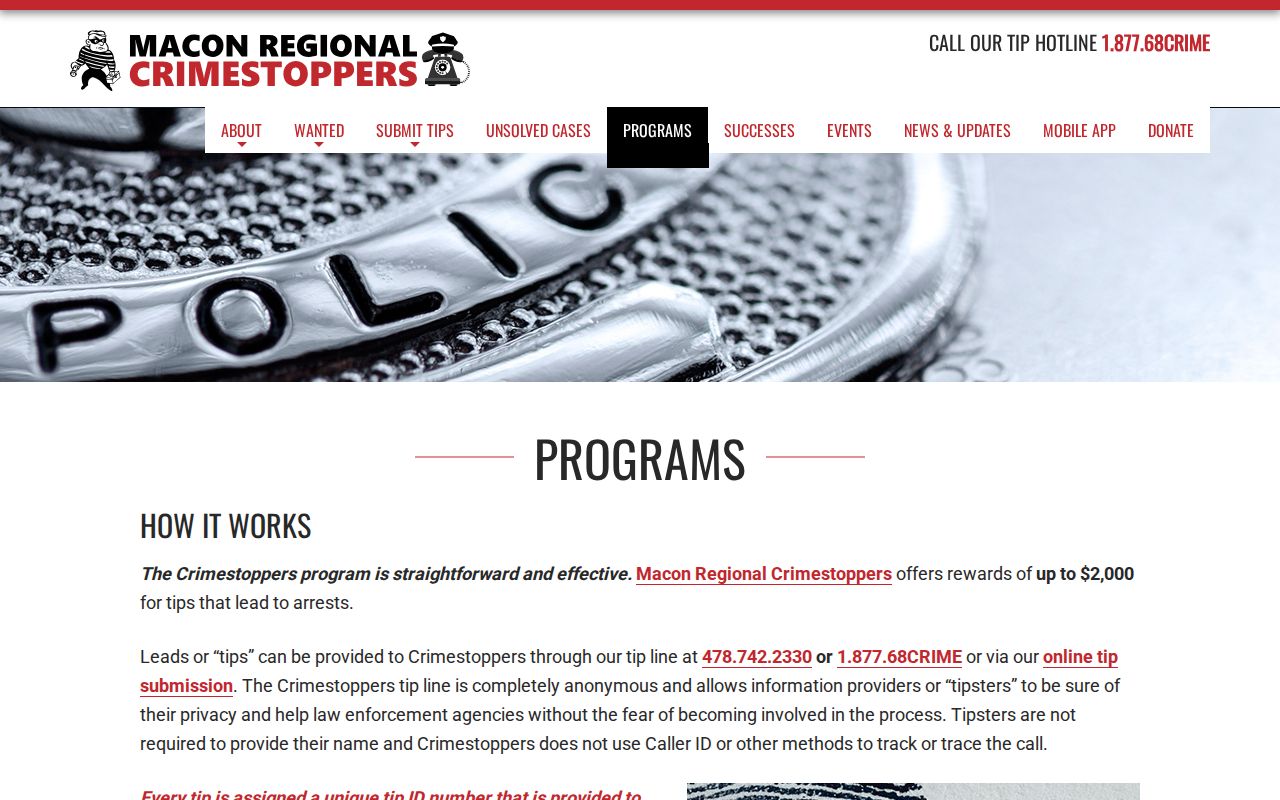
The image concerns program mechanics only. It does not reproduce or summarize any individual notice.
Macon Regional Crime Stoppers
Anonymous regional tip service
478-742-2330 or 1-877-68CRIME
How the Lists Work
The wanted interface is a selected set of public alerts from participating agencies. Its visible search fields include first name, last name, sex, race, offense, and county. Those filters organize notices. They do not establish that the database contains every Twiggs County warrant or that a notice reflects a court's status at this moment.
No publication cadence was found. A notice may change after arrest, surrender, recall, or agency review. An ordinary bench warrant, sealed matter, new process, or removed notice may never be visible there. Confirm one's own possible warrant with the sheriff or issuing court.
Note: The live wanted page is a changing snapshot. Presence or absence does not establish current Twiggs County warrant status.
Twiggs Wanted Filters Have Limits
A county filter can narrow the regional list, but it cannot prove where a case was filed or which court controls it. Allentown and Danville cross county lines, and a city label alone may point to the wrong clerk. A wanted notice is also different from the sheriff's Current Inmates roster, which is organized around people already booked.
- Wanted notice
- A selected public alert intended to generate information.
- Active warrant
- Court or law-enforcement process not yet recalled, served, or otherwise closed.
- Recall
- Court action withdrawing the warrant process.
- Tip ID
- The private number used to follow up with Crime Stoppers.
Only the issuing court or official custodian can confirm whether process is active.
How to Report a Tip Safely
Use the official hotline or P3 route. Give facts about location, time, and conduct. Do not investigate, follow, detain, or contact anyone.
- Call 478-742-2330 or 1-877-68CRIME, or use the official P3 channel.
- State what was observed and where, without guessing.
- Save the unique tip ID. It is needed for follow-up.
- Step back and let law enforcement decide how to respond.
Key Point: Tips are anonymous and may qualify for a reward. Use 911, not Crime Stoppers, for an immediate emergency.
Twiggs P3 App Is Optional
The Crime Stoppers mobile listing describes wanted-notice access, P3 tip handoff, hotline access, public-safety updates, and 911. The app is a convenience channel. It is not a warrant check and does not replace the official website or telephone lines.
The app's official listing appears here:
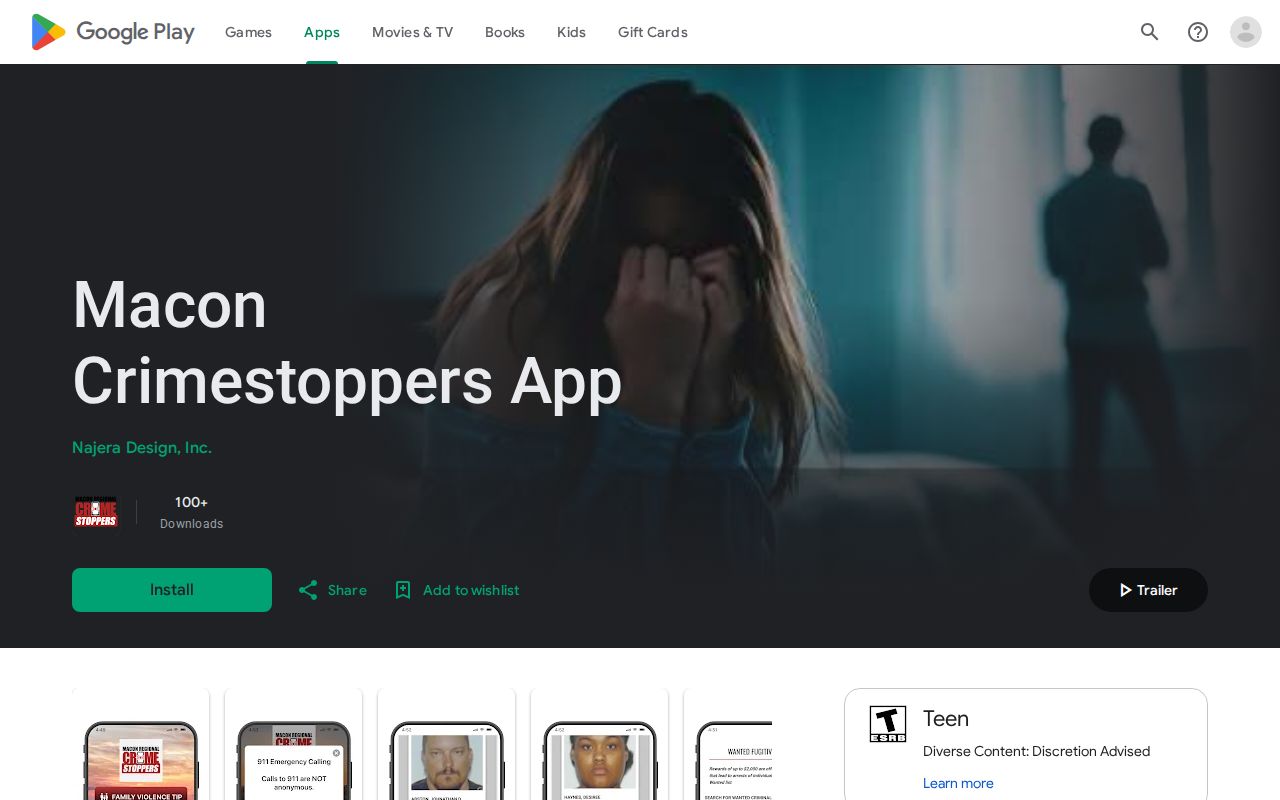
A person can still submit a tip by telephone if the app is unavailable. Retain the tip ID regardless of the chosen channel.
Most Wanted vs an Active Warrant
A most-wanted notice is selected for public outreach. An active warrant is a legal status. Most active warrants may never receive a public wanted notice.
| Feature | Most Wanted List | Active Warrant |
|---|---|---|
| Scope | Curated regional notices | Any current legal process |
| Purpose | Public tips | Bring a person before the court |
| Record owner | Publishing program or agency | Issuing court and serving agency |
| Current status | Not conclusive | Confirmed by court or custodian |
Twiggs Tips and Rewards
Crime Stoppers says a tip may earn up to $2,000 when information leads to an arrest. That is conditional language, not a promise. The program controls eligibility, follow-up, and payment. Keep the unique tip ID because anonymity means staff do not use a caller's name to track the submission.
Do not post the tip publicly or send it through an unofficial account. Public posts can expose private information, spread a stale notice, or interfere with law enforcement. Use the program's direct route. For urgent danger, call 911.
Note: A reward concerns the tip program and does not change the warrant, criminal case, or court outcome.
If You Believe You Are on a List
Do not use the tip channel to clear one's own case. Contact a lawyer, then call the Twiggs Sheriff's Office at 478-945-3357 for Warrants Clerk routing. If the issuing court is known, contact that clerk too. Ask about voluntary appearance, bond, surrender, and current court instructions before traveling.
The sheriff publishes no direct Warrants Clerk line and no complete public warrant search. If a document is needed, its records custodian accepts a narrow written request. A court may restrict sealed, juvenile, or investigative material.
Important: Consult counsel before appearing. A lawyer can seek confirmation and ask about a safe, orderly voluntary surrender or court appearance.
Twiggs Task Forces Do Not Search
The U.S. Marshals Middle District page describes the Southeast Regional Fugitive Task Force and multi-agency enforcement work. Twiggs falls within the regional setting, but a task force is not a public status database or records desk.
Federal matters use a separate lane through the Middle District of Georgia and PACER. A sealed or unexecuted federal warrant may not appear on a public docket. State and municipal questions remain with the Twiggs sheriff and the issuing Georgia court.
This distinction matters when a social post mentions several agencies. The number of agencies involved does not make a public notice a complete warrant record. Always use official contact information and do not act on an unsolicited payment demand.
Twiggs Most Wanted Status Checks
A person checking an own-record concern should bypass the tip workflow. Gather the legal name used in the case, approximate incident date, city, agency, court, and case or citation number. Call Twiggs Sheriff's administration at 478-945-3357 and ask for Warrants Clerk routing. No direct warrant-desk line is published, so the main number is the documented route.
If the court is known, contact it as well. Twiggs Magistrate Court handles arrest and search warrant issuance, pre-warrant hearings, first appearances, bonds, and preliminary hearings. The Superior Clerk keeps felony and Superior criminal files. Probate Court lists traffic-citation jurisdiction. A warrant may move with a bound-over case, which can explain why one office sends the caller to another.
Ask whether the process is current, which office can confirm it, and what instructions apply to counsel, bond, voluntary surrender, recall, or appearance. Do not walk into an office based on a social post alone. Confirm hours, security, identification, and whether an attorney or appointment is needed.
Twiggs Wanted Notice Safety Boundaries
Public wanted notices invite information, not private enforcement. Do not follow a person, inspect private property, try to confirm an address, make contact, or post identifying details elsewhere. Follow the safety language on the official live notice because any warning can be specific to that situation. Call 911 when danger is immediate.
Do not infer guilt from a wanted notice. A warrant is court process, and the underlying case still follows the legal system. Publication may lag arrest, surrender, recall, or another status change. That is why the program's live source and official agency contact matter more than a saved image, copied post, or search-engine result.
Privacy also explains the describe-and-link approach. No roster, names, photographs, mugshots, addresses, offenses, or case numbers are hosted here. The official program controls its notices and can update or remove them. This boundary keeps the focus on safe tips and accurate routing.